What if Energy Cost 10x More? The Technologies Already Waiting for That Moment
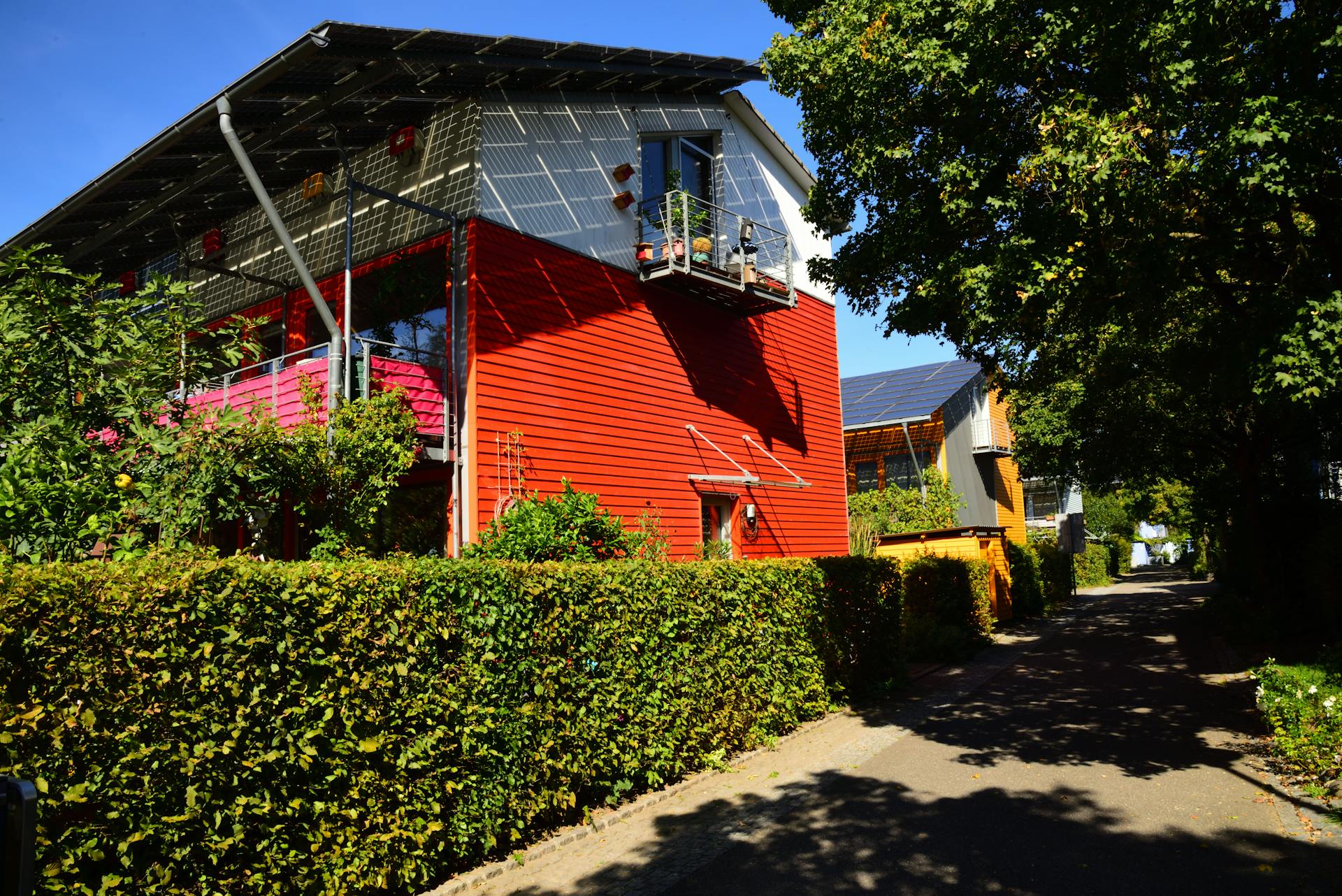
The World Bank forecasts a 24% rise in global energy prices in 2026, driven by the Strait of Hormuz crisis — the largest oil supply disruption in recorded history. This article examines what changes when electricity becomes genuinely expensive, and which technologies — from balcony solar stations to mechanical coffee grinders — already exist to cut household grid consumption close to zero without changing how a household functions.
The Hormuz Shock: Why 10x Is No Longer Hypothetical
Since early 2026, tanker traffic through the Strait of Hormuz — which carries around 20% of global seaborne oil — has been severely disrupted. The IEA described the event as “the largest supply disruption in the history of the global oil market”; Brent crude hit $138/barrel in April. The World Bank projects a 24% rise in global energy prices in 2026 — the steepest spike since Russia’s invasion of Ukraine in 2022.
A tenfold price increase is a thought experiment, not a forecast. But it is a useful one. At €3.50/kWh instead of today’s €0.30–0.35, a household consuming 150 kWh/month would spend €525/month on electricity — comparable to rent in many European cities. That threshold doesn’t just change budgets; it transforms the economics of every alternative technology. What currently pays back in five to eight years pays back in five to eight months.
Where Your 150 kWh Go Every Month
A typical European apartment without electric heating consumes 200–350 kWh/month; efficient households reach 150 kWh. The breakdown is consistent: the refrigerator accounts for 20–25% (30–37 kWh), lighting 10–15% (15–22 kWh), laundry 10–15% (15–22 kWh), electronics and TV another 10–15%. Phantom loads — devices on standby — add 7–15 kWh per month while delivering nothing.
A refrigerator over ten years old consumes around 50 kWh/month; a current A+++ model uses 15–20 kWh. That 30 kWh difference costs nothing to maintain once the appliance is replaced. A hair dryer rated 1,500–2,000 W running 12 minutes per day consumes roughly 8–10 kWh/month — the same as all phantom loads combined.
The Fast 30–50 kWh: Cuts That Require No Sacrifice
Power strips with switches or smart plugs (€10–30) eliminate phantom loads entirely: a router, television, console, and assorted chargers typically draw 5–15 W around the clock. Replacing all bulbs with modern LED reduces lighting consumption by two to five times — a 50 W halogen becomes a 5 W LED at equivalent brightness. Washing laundry at 30°C instead of 60°C saves up to 80% of a cycle’s energy, since the majority of electricity goes to heating water, not turning the drum.
Combined, these measures save 30–50 kWh/month without changing habits. At €0.35/kWh: €10–17/month — easy to ignore. At €3.50/kWh: €105–175/month — an amount that changes behaviour immediately.
19th-Century Technology With 21st-Century Materials
Before electric motors became cheap, engineering relied on springs, flywheels, and pneumatics. 19th-century spring steels stored 100–200 J/kg; modern maraging steel and amorphous metal alloys store 500–2,000 J/kg — five to ten times as much at the same weight. Ceramic bearings and precision hardened gears deliver 95%+ efficiency against 60–70% for historical mechanisms.
Carbon-fibre flywheels in vacuum chambers on magnetic bearings store energy at 90%+ efficiency for days. Industrial versions already stabilise power grids; domestic form factors are in development. Paris ran a citywide compressed-air network (Compagnie Air Comprim?) until 1994, powering clocks and elevators across the city. With modern carbon-fibre cylinders and isothermal compressors, a district-scale version would be genuinely viable at 10x prices.
A Morning Without a Power Socket
A hand coffee grinder with ceramic burrs — 1Zpresso JX-Pro or Comandante C40 — produces a more consistent grind than most electric grinders at equivalent prices. Manual lever espresso machines — Flair Espresso (€160–300) and Cafelat Robot — generate 9 bars of pressure by hand with no electrical components whatsoever. The AeroPress brews quality coffee in under two minutes with no electricity and no parts that wear out mechanically.
Microfibre turban towels absorb three to five times as much water as standard towels; hair dries naturally in 30–40 minutes instead of two hours, eliminating the need for a 1,500–2,000 W hair dryer for most hair types. A double-edge safety razor requires €15–50 for the handle and €0.10–0.30 per blade, with zero energy input. These alternatives work today — at 10x prices, the economic case for adopting them becomes unambiguous.
The Gym as an Untapped Power Plant
A person cycling at moderate effort produces 100–150 W; at high intensity, up to 300 W. SportsArt Eco-Powr bikes convert up to 74% of human energy into utility-grade AC electricity, returning an average of 160 Wh per workout hour — up to 250 Wh at peak effort. In energy-generating gyms in Hong Kong and Portland, an evening session across several dozen machines covers a substantial portion of the building’s total consumption.
For home use: a dynamo hub (SON Delux, Shimano) on a commuter bicycle produces a steady 3 W while riding — enough for simultaneous USB phone charging and a front light. The Woodway Curve curved treadmill runs with no motor; the user drives the belt, and that kinetic energy is in principle recoverable. At 10x prices, a built-in generator in exercise equipment would be a standard specification rather than a premium feature.
Balcony Solar and Solar Water Heating: Real Numbers
A Balkonkraftwerk — an 800 W solar kit with micro-inverter that plugs into a standard wall socket — has dropped from €600–1,000 in 2022 to €250–700 today. An 800 W south-facing installation in Germany generates 600–900 kWh per year (50–75 kWh/month average); in sunnier southern European locations, up to 100 kWh/month. At €0.35/kWh that saves €160–180/year, with a payback period of three to six years. At 10x: €1,600–1,800/year in savings, payback in one to five months.
A solar vacuum tube collector covers hot water for a household of two to three people for eight months of the year, saving 20–40 kWh/month in electricity if an electric water heater is in use. Together, a balcony power station and solar water heater generate or displace 70–115 kWh/month — roughly the full consumption of an efficient apartment. The hardware is available off the shelf today; the 10x scenario changes only the payback calculation.
The Full Arithmetic
| Measure | Effect (kWh/month) |
|---|---|
| Eliminate standby + LED + A+++ refrigerator | ?40–50 |
| Mechanical alternatives (coffee, hair drying, cleaning) | ?20–30 |
| 800 W balcony solar station | +50–75 |
| Solar water heater (if electric boiler) | +20–40 |
| Net from grid | 0–20 |
What the 10x scenario reveals is not that life without cheap electricity is impossible. It reveals that the technologies to handle it already exist — and have for some time. Balcony solar panels, lever espresso machines, energy-generating exercise bikes: all available now. The transition is not waiting on invention. It is waiting on economics.
The Hormuz crisis of 2026 moved the calculus measurably. The next disruption — geopolitical, climatic, or infrastructural — will move it further. At some threshold, reducing grid dependence stops being ideological and becomes simply rational. The question is not whether that threshold will be reached, but whether preparations begin before or after it is.