How to Breed a Neanderthal: A Guide for the Very Patient
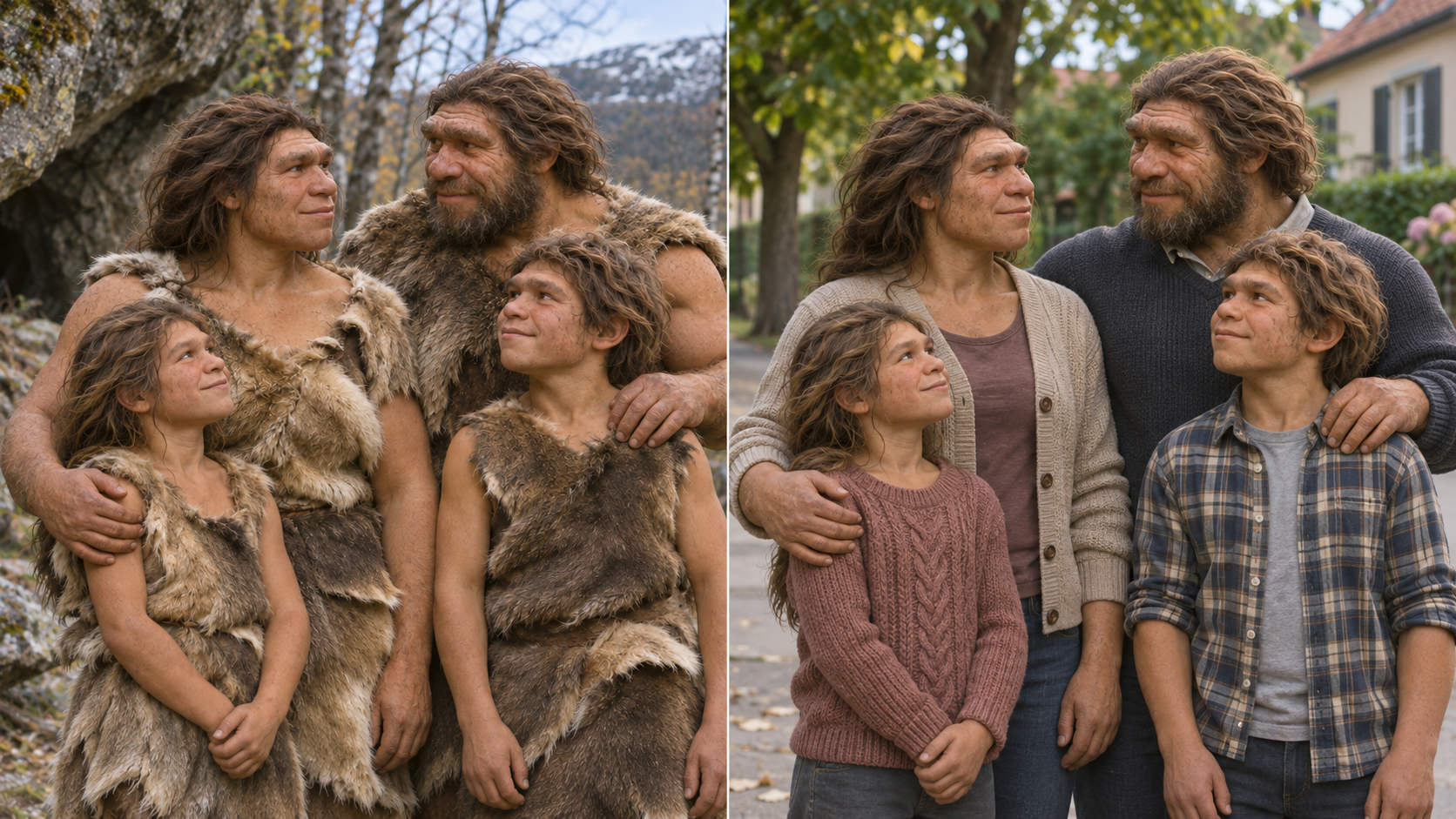
Could ordinary inheritance, over many generations, produce people who closely resemble Neanderthals in appearance and inherited traits? Projects involving aurochs and quaggas are pursuing a similar goal with animals. Here is how far that analogy takes us, and what a DNA test and a little AI-assisted programming can reveal about the Neanderthal heritage we still carry.
Imagine deciding to become a mad scientist. Your equipment consists of a computer, genetic test results and an unreasonable amount of patience.
Your goal is to bring back Neanderthals.
In this thought experiment, that means gradually approaching their appearance and inherited characteristics through ordinary inheritance. Reconstructing an ancient genome in full would be an additional achievement, but it is not a requirement for the goal we have set.
The idea sounds far-fetched. Yet there is an interesting starting point: Neanderthals disappeared, but a substantial amount of their genetic heritage survives in us. And attempts to recover the characteristics of extinct animals already exist.
The Neanderthal inside us
Around 50,000 years ago, ancestors of modern humans encountered Neanderthals. Their interactions included interbreeding, and they had children together.
As a result, most people of European or Asian ancestry carry roughly 1–2% Neanderthal DNA. Small amounts are also found in many populations with predominantly African ancestry.
That does not mean everyone carries the same fragments. Imagine an ancient book torn into millions of pieces. Different people inherit different pages; over thousands of generations, the pieces are shuffled, some disappear, and others survive.
Could we put the book back together?
A study of Neanderthal ancestry published in Science in December 2024 offers an intriguing number. Combining fragments identified in ancient and present-day human genomes, the researchers reported coverage of about 61.7% of the autosomal genome accessible to reliable analysis: the studied regions of the non-sex chromosomes.
That figure is easy to misread. It does not mean someone alive today has 61.7% Neanderthal DNA. It combines fragments from many genomes, including ancient ones, and some of those sequences may no longer survive in living people.
Even with those qualifications, a great many fragments of our extinct relatives remain. Could we increase their concentration?
The time machine invented by animal breeders
The relevant technique is called back-breeding. Breeders normally select animals for desired characteristics: larger dogs, cows that produce more milk, or chickens with a particular colour.
Back-breeding uses selection to approach an ancestral appearance. The idea is to combine characteristics that survive in the living descendants or close relatives of an extinct animal.
Europe’s attempt to bring back the aurochs
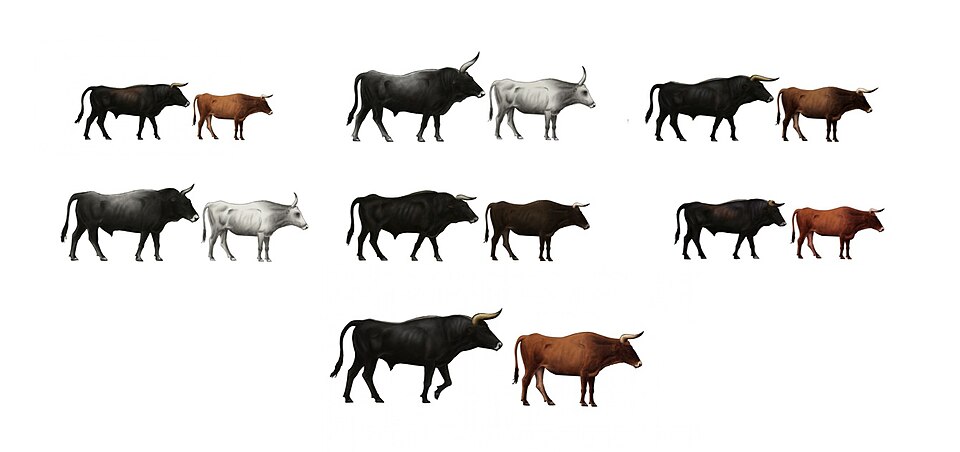
Aurochs (Bos primigenius) were enormous wild cattle and the ancestors of domestic cattle. Their powerful bodies and distinctive horns made them quite different from the cows most of us know. The last known aurochs died in Poland in 1627.
Domestic cattle retained some of their ancestors’ genetic heritage, giving breeders something to work with. Heck cattle were an early twentieth-century attempt; today, the Tauros Programme draws on several traditional European cattle breeds to approach the aurochs in appearance and ecological role.
The aim extends beyond impressive horns. These animals are intended to live in natural landscapes, graze independently and perform much the same ecological function that wild aurochs once did.
Genetically, they remain modern cattle. But the programme’s goal is an animal resembling the aurochs in appearance, behaviour and ecological function. That is precisely the analogy our thought experiment needs.

The zebra that almost came back
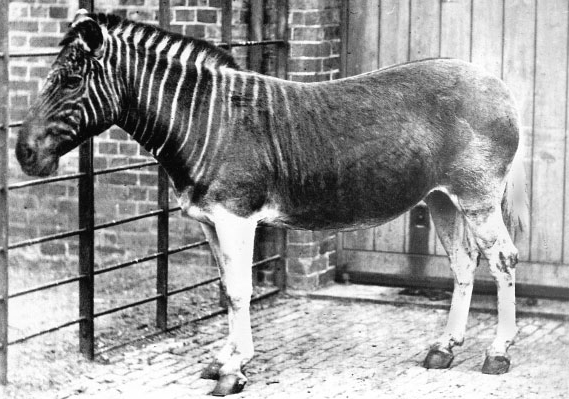
The quagga provides an even more visible example. This extinct form of plains zebra lived in South Africa. Its stripes were concentrated towards the front of the body, while the hindquarters were largely brown.
The last known quagga died at Amsterdam Zoo in 1883.

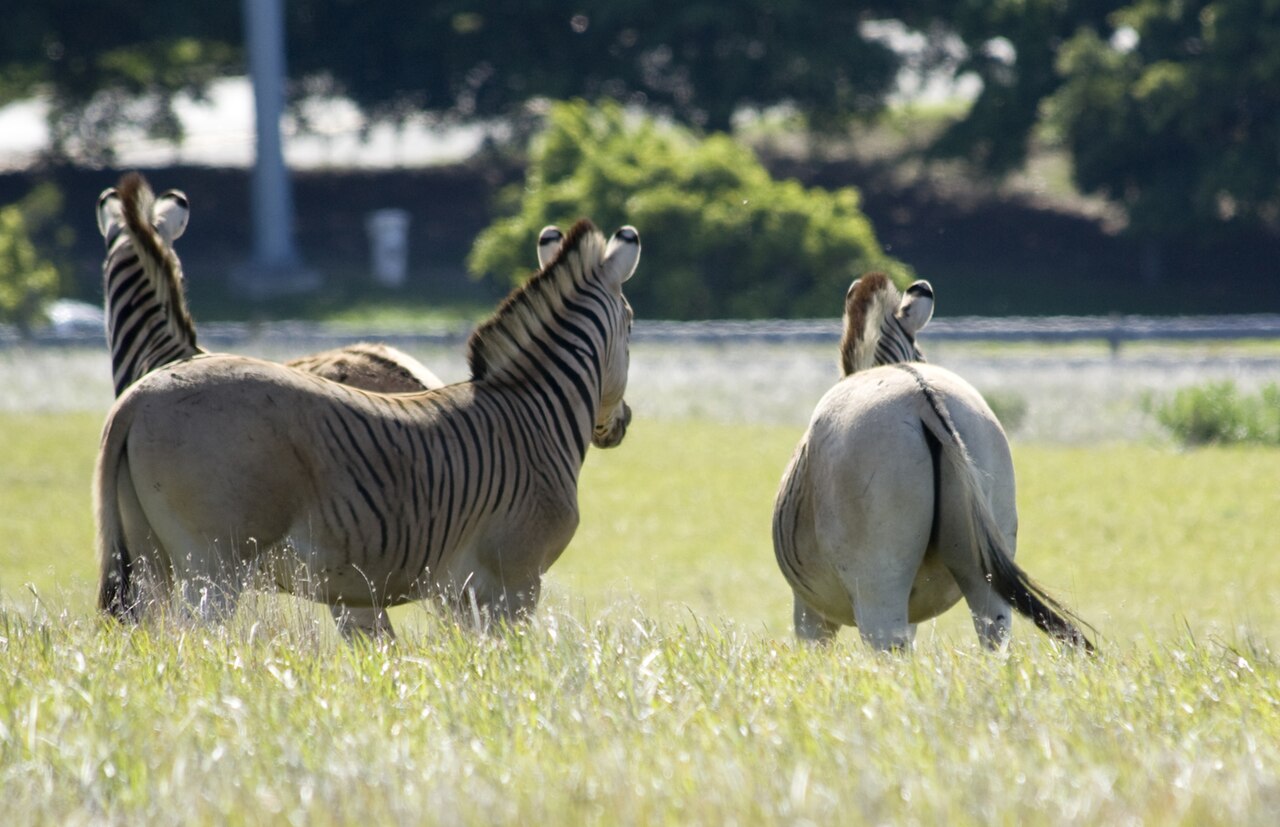
DNA research showed that the quagga was a subspecies of the plains zebra rather than a separate species. In 1987, the Quagga Project began selecting and breeding plains zebras with reduced striping.
Within several generations, the project produced animals with fewer stripes that resembled extinct quaggas. A study of the project’s results describes that resemblance. The achievement concerns the stripe pattern, rather than recovery of every characteristic of the extinct subspecies.

Both examples illustrate the same principle: if the necessary inherited variants survive in living populations, selection can recover some lost traits.
For our human thought experiment, the target is also a resemblance in phenotype: the observable characteristics of an organism’s structure and function. Genetic similarity remains a separate measure.
Neanderthals had stocky bodies, relatively short forearms and lower legs, and pronounced brow ridges. How closely could that combination be approached using the inherited variation in people alive today? Success with zebra stripes does not establish the answer.
What if there were a Neanderthal Tinder?
Suppose a community becomes interested in approaching the Neanderthal appearance and preserving related inherited characteristics. Its members are interested in ordinary inheritance, without editing embryos.
You could imagine a dating app where participants voluntarily share results from Neanderthal ancestry analyses and information about their physical characteristics. Some carry more of particular ancient variants than others, and different people carry different fragments.
Choosing partners with similar characteristics is called assortative mating. It changes how inherited variants are combined, but does not by itself guarantee that those variants become more common across the population. Directional selection is an additional condition that a matching algorithm cannot simply replace.
There is another common trap here. If each parent has 2% Neanderthal ancestry, their child does not automatically get 4%. The child’s expected proportion is close to the parental average, although the particular fragments inherited can differ.
Some fragments are passed on and others are not. The parents may also carry overlapping fragments, rather than two completely different sets. A dating service alone therefore does not ensure a growing share of Neanderthal DNA.
For our actual goal, there is a further complication: even an increased percentage would not necessarily produce a more Neanderthal-like appearance. We would need to understand which inherited variants affect the desired traits and how those variants work together. There is no established method for recovering that entire combination in humans.
Selection also cannot recover ancient variants that have disappeared from living populations. Similar-looking traits can, in principle, arise through different genetic combinations, however. Losing the original sequence does not settle the separate question of physical resemblance.
Why natural selection removed some Neanderthal ancestry
A 2014 paper in Nature mapped Neanderthal ancestry in modern human genomes and identified regions where it is unusually scarce. Some ancient variants were apparently disadvantageous in a Homo sapiens genetic background, and natural selection reduced their frequency.
Neanderthal ancestry was particularly depleted on the X chromosome and in genes expressed preferentially in the testes. The authors proposed a connection with reduced male fertility in ancient hybrids. That is an interpretation of the genetic pattern, rather than a direct measurement of those individuals’ reproductive health.
Evolution has already run a long experiment combining the two human lineages. Judging by their descendants’ genomes, some combinations were passed on less successfully than others.
More Neanderthal ancestry does not automatically mean greater strength, higher intelligence or a face resembling a museum reconstruction. Anatomy depends on complex interactions between genetic variants, their regulation and development.
There is also an ethical boundary. Adults can take a voluntary interest in their ancestry; future children have interests, health needs and a right to make their own choices. They cannot simply be treated as instruments of a genetic project.
How much Neanderthal ancestry do you carry?
So far, this has been a thought experiment. The practical part begins with investigating the ancient variants you already carry.
Some consumer genetic testing companies let customers download their raw data. For example, 23andMe provides a way to download raw genetic results.
The download is typically an archive containing a text file with hundreds of thousands of rows. Each row identifies a marker, its chromosome and position, and the reported genotype. This is not a complete genome sequence: a typical consumer genotyping test checks a selected set of positions.
Those results can still be compared with known markers of Neanderthal ancestry. 23andMe itself offers a Neanderthal Ancestry Report examining more than 2,000 genetic variants. It reports detected variants and compares the result with other customers.
Three different measurements need to be kept separate:
- Marker count: how many of the relevant variants were detected in the data.
- Percentile: how your score ranks within a comparison group.
- Percentage of Neanderthal DNA: an estimate of the share of your genome inherited from Neanderthal ancestors.
The 95th percentile does not mean you have 95% Neanderthal DNA.
To estimate ancestry across a genome, researchers examine stretches of chromosomes and the combinations of variants they contain, called haplotypes. This helps identify the origins of entire DNA fragments. Neither a marker count nor an ancestry percentage directly measures how Neanderthal-like someone looks.
Existing services for exploring Neanderthal DNA
There are already several tools for people who want to explore their results.
ExploreYourDNA offers a Neanderthal SNP Calculator. It accepts raw files from common consumer tests and compares them with a reference set of variants associated with Neanderthal ancestry. Processing takes place on its server. The site presents its reported percentage as an approximate estimate for learning about the subject.
HealthOSX offers free analysis of data from 23andMe and other tests. According to its documentation, it provides a count of Neanderthal variants and a percentile against a 1000 Genomes reference sample, rather than a percentage of ancient DNA. It says the raw file is processed in the browser.
Genomelink offers a separate report on Neanderthal and Denisovan ancestry.
These services use different markers, reference samples and algorithms, so the same person can receive different numbers. Not every service publishes enough methodological detail for an independent assessment of its accuracy.
Should you upload your DNA to someone else’s server?
Genetic data is an unusual kind of personal information. You can change a password or a phone number; you cannot replace your inherited genome after a data leak.
Your genetic data also reveals information about relatives who may never have agreed to share it. Before uploading a file, check the service’s privacy policy, retention periods and deletion options.
If you would rather keep the raw file to yourself, AI-assisted programming offers another route.
Build a local DNA explorer with AI
You do not need to be a bioinformatics specialist to start writing a small exploratory program. Coding agents such as Claude Code or OpenAI Codex can help with the software.
The idea is straightforward: read a raw genetic data file, compare it with a scientifically sourced reference list, and produce a report. Ordinary Python is enough for a first experiment. The reference list and the interpretation still require care.
- Get the raw data. If you have already taken a genetic test, download the raw DNA file from the provider.
- Find a scientific reference. Use a published list of variants associated with the transfer of Neanderthal DNA into modern humans, known as introgression. The Neanderthal Genome Project provides access to an ancient genome, but that alone is not an introgression marker list. A match with ancient DNA can also reflect ancestry shared by both human lineages.
- Ask the AI to write the reader and matcher. The initial program only needs to parse the text file, compare it with the reference and count detected variants.
- Check the matching assumptions. Genome assemblies, coordinates, DNA strands and allele notation must agree. A marker missing from the file means “no data,” not “no Neanderthal variant.”
- Run the analysis locally. The finished program should read the real genetic file without sending it to a cloud chat.
Here is a prompt you could give Claude Code or Codex:
Create a local Python program for exploring Neanderthal genetic variants. It should read a 23andMe raw DNA TXT file, match single-nucleotide variants (SNPs) against a separate, verified reference list of introgression markers, and report the number of positions with a detected variant, the number of checked positions and the percentage of the reference covered. Validate the genome assembly, DNA strand and alleles. Count missing markers and undetermined genotypes separately as unknown. Add tests using synthetic genotypes. Do not use external APIs or send genetic files over the internet. Do not calculate a percentage of Neanderthal ancestry without a scientifically justified model.
Installing Claude Code or Codex on your computer does not make the AI itself local. With a cloud model, file contents and task context may be sent to the model provider.
Develop the program using synthetic data, then run the finished script on the real genetic file. If you also want to keep the development code and context away from cloud AI providers, a local model through LM Studio or Ollama is another option. Codex CLI supports that arrangement.
A simple marker explorer will not produce a scientifically validated ancestry percentage. It can still let you examine real variants in your own data without uploading the raw file to another service.
Could we actually bring Neanderthals back?
If the goal is to approach their appearance and inherited characteristics, the aurochs and quagga projects offer a useful way to frame the question. An exact match to an ancient genome is not required. Neanderthals also differed from one another, so there is no single genome that represents a universal “100% match.”
The open question is how closely their appearance could be approached using the inherited variation that survives in modern humans. Resemblance in individual traits does not establish that the entire combination can be recovered, and counting ancient markers does not explain how those traits develop.
If the experiment succeeded, the result would be people resembling Neanderthals in the selected characteristics. That was the goal from the beginning. We cannot currently make a sound prediction about how many generations it would take or which characteristics are achievable.
Extinction usually brings to mind a complete disappearance. Sometimes, however, a population vanishes while fragments of its genetic history remain for tens of thousands of years.
Recovering an ancient appearance remains a thought experiment. Exploring the Neanderthal variants we already carry is something we can do today.
For that first step, a computer and some curiosity will do.
The cover illustration was created with AI.